Sheet 04 of 08
From cherry
to container.
Seven steps, and we are there for all of them. The third is the one that makes an Indonesian coffee taste Indonesian, and it is also the one most often done badly.
01
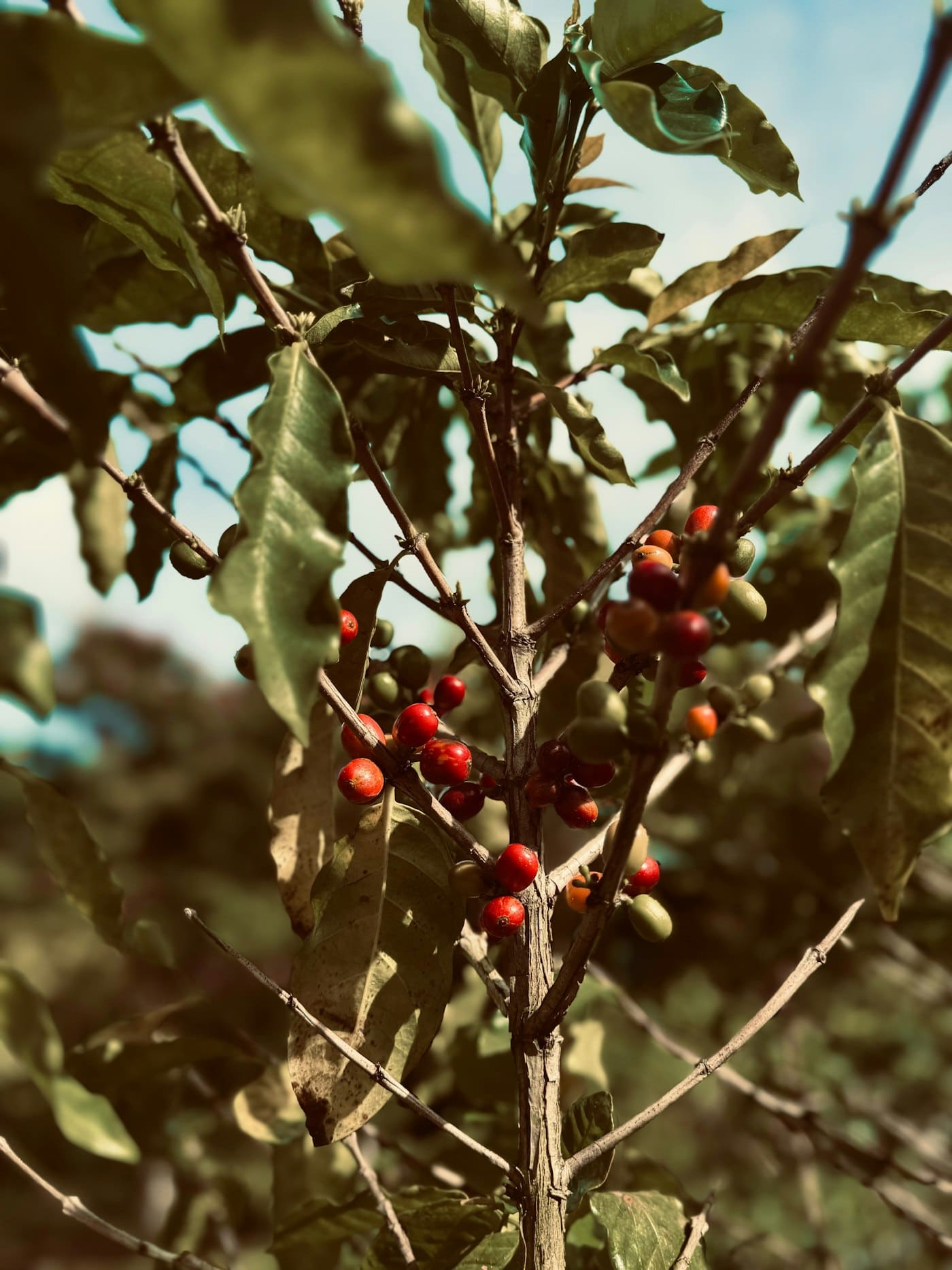
Picking
Ripe cherry only, picked by hand and floated at the collection point within eight hours. Underripe fruit and floaters are separated on the spot and paid at a lower rate, so the incentive sits with the picker rather than with an argument at the weighing station.
02
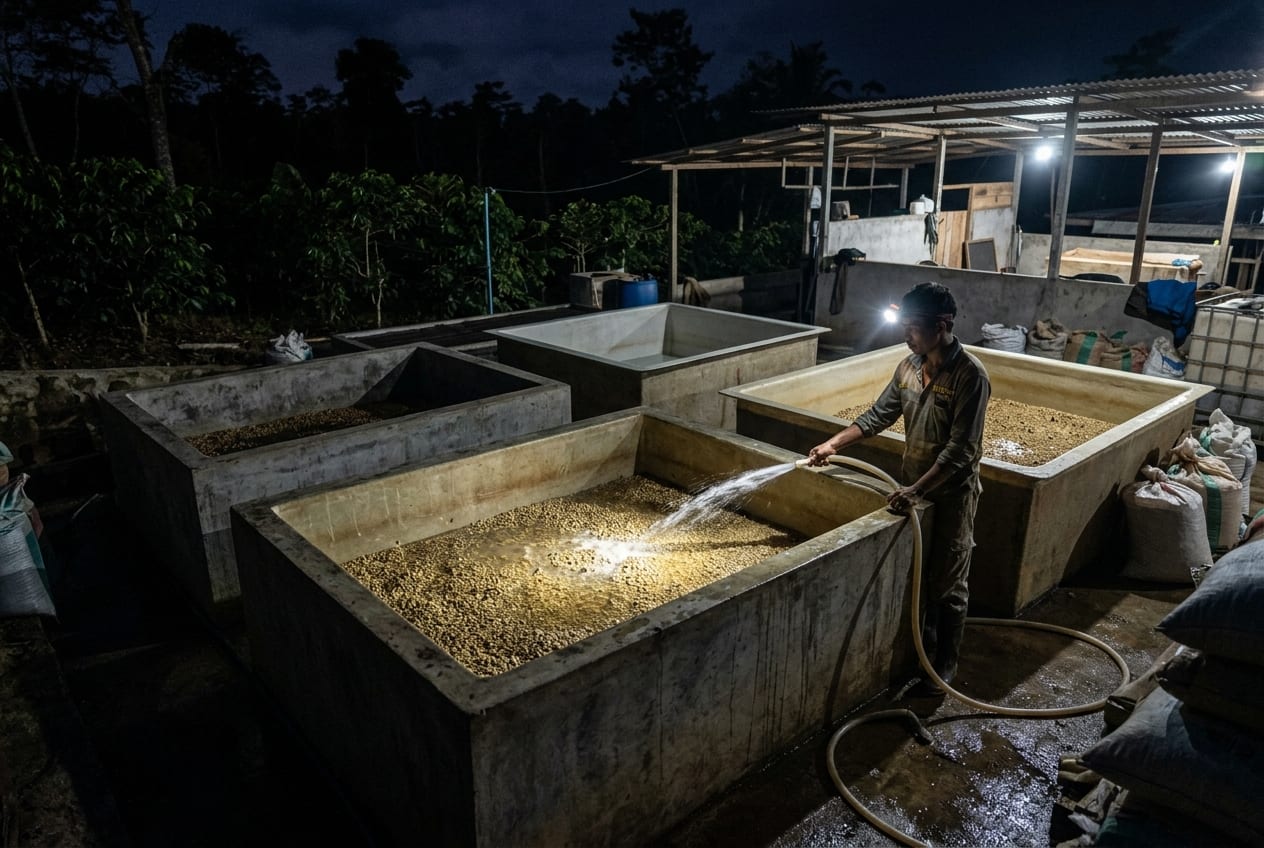
Pulping
Pulped the same evening, then held in tanks for 8 to 16 hours depending on how cold the night runs at that altitude. Mucilage comes off with river water and a wooden paddle.
03
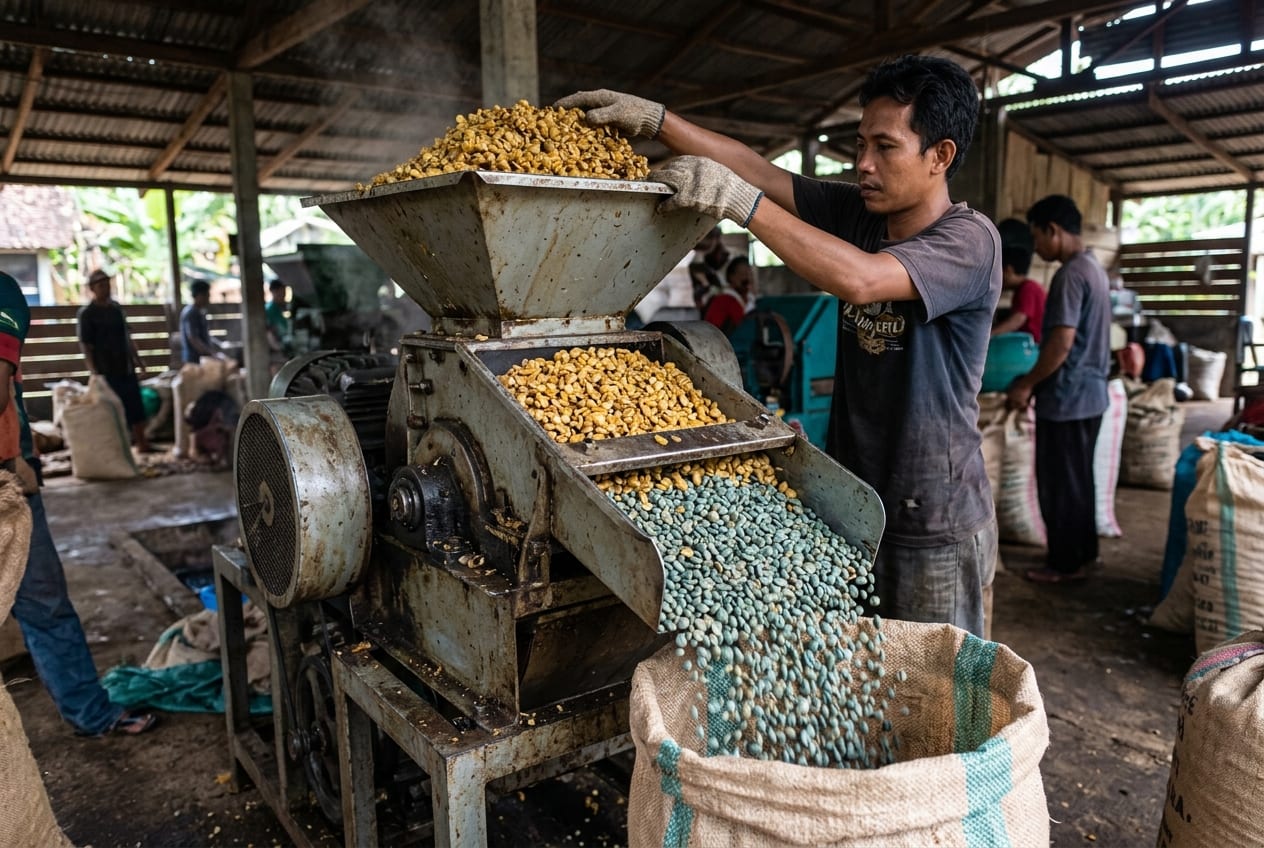
Hulling
On the Sumatran marks the parchment comes off wet, at around 35–40% moisture. Everything else is dried in parchment and hulled dry at the end. The two roads separate here and never rejoin.
04
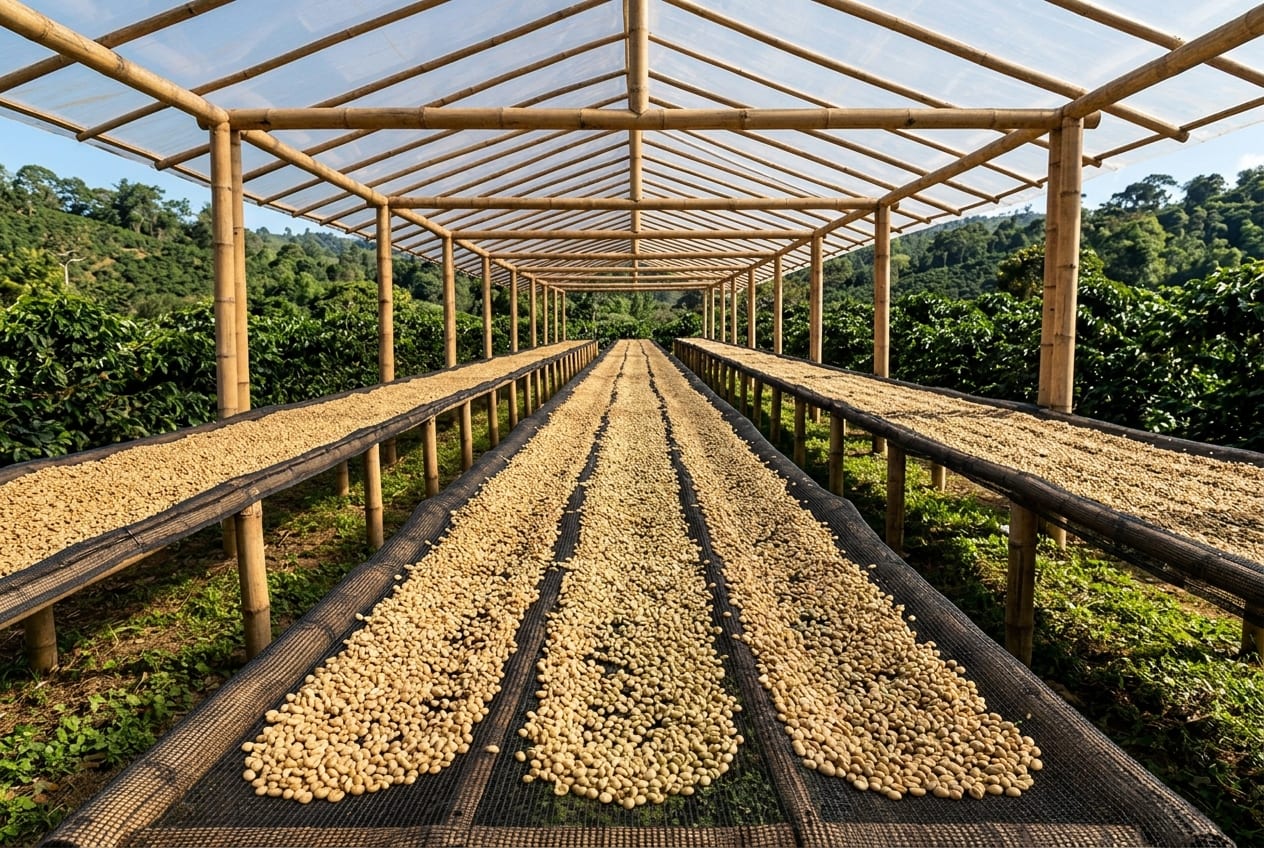
Drying
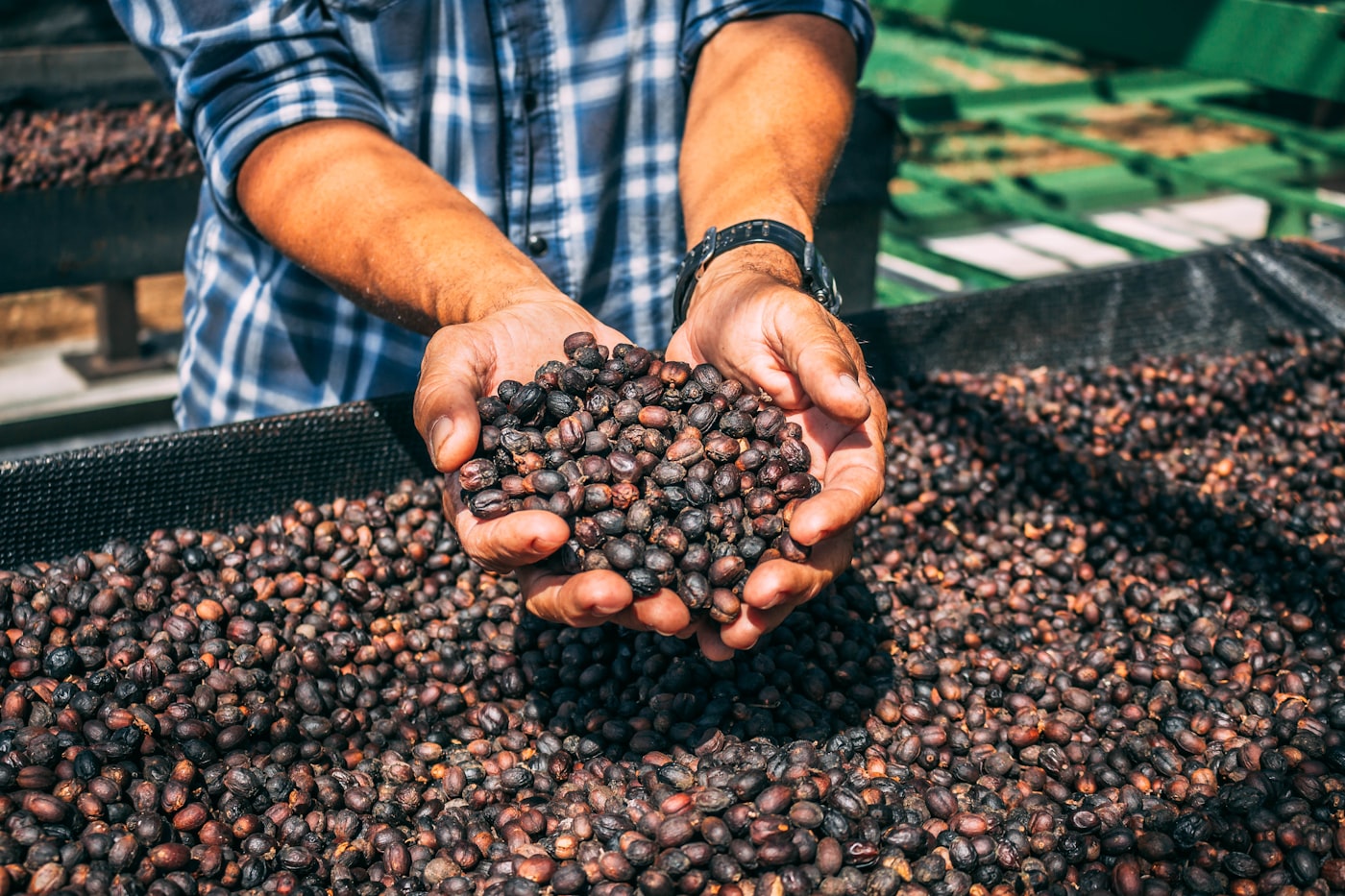
Raised beds and covered patios, down to 11–12.5% over four to ten days, turned hourly for the first two. Nothing goes on a mechanical dryer unless rain forces it, and when it does we write that on the lot sheet.
05
Grading
Density table, screen sizing, colour sorter, then hand-picked twice by the sorting floor in Belawan. A machine will not catch a faded bean that still has the right density; two people at a table will.
06
Cupping
Every lot is cupped three times: at the mill, at the Medan lab, and by you, from the pre-shipment sample. Nothing is stuffed before that third approval comes back.
07
Stuffing
60 kg jute with GrainPro liners, 320 bags to a 20-foot container, 19.2 tonnes. We take a final moisture reading at the container door and photograph the seal.
What wet-hulling actually does
On the Sumatran marks we dry parchment only to around 35–40% moisture and then hull it while the bean is still soft and swollen. It is a strange thing to do to a coffee. The bean leaves the huller a deep blue-green, cracked open at the centre cut, and finishes drying naked, exposed to the yard and to whatever the afternoon brings.
It was not invented for flavour. It was invented for weather: in a place that rains most afternoons for half the year, a farmer who waits to dry in parchment loses the crop to mould. Hulling early cuts the drying time roughly in half and lets a smallholder turn cherry into cash in a week rather than three.
What it costs is clarity and acidity. What it buys is body, cedar, and the low earthy register that people mean when they say Sumatra. Done carelessly it also buys mustiness, a wide moisture spread across the bag, and a bean too fragile to sort. That is the whole reason we hull at our own mill instead of buying asalan off the market.
| Process | What happens | In the cup | Marks |
|---|---|---|---|
| Wet-hulledgiling basah | Parchment removed at 35–40% moisture, bean dries naked | Heavy body, low acidity, cedar, earth, tobacco | KLD-GY · KLD-MD |
| Fully washed | Fermented, washed, dried in parchment to 12%, hulled dry | Clean, articulate, higher acidity, tea and stone fruit | KLD-TR · KLD-KT · KLD-BJ · KLD-JP |
| Honey | Pulped but not washed, dried with the mucilage still on | Sweeter and more syrupy, floral on the lighter lots | KLD-KT · KLD-JP |
| Natural | Whole cherry dried on beds, hulled at the end | Stewed fruit, thick body, and more risk in both directions | KLD-BJ · KLD-JP |
Two mills, eleven hours apart
One sits in the coffee, one sits by the container gate. Between them is a road that takes a night, which is the single biggest reason our moisture readings hold.
Bener Meriah — wet mill and collection
- Receives
- Cherry from 7 collection points, weighed and paid until 20:00
- Capacity
- Up to 14 tonnes of cherry a day in peak weeks
- Drying
- 40 raised beds, 900 m² of covered patio
- On site
- Pulpers, fermentation tanks, wet huller, moisture meters, a two-table cupping room
Belawan — dry mill and warehouse
- Does
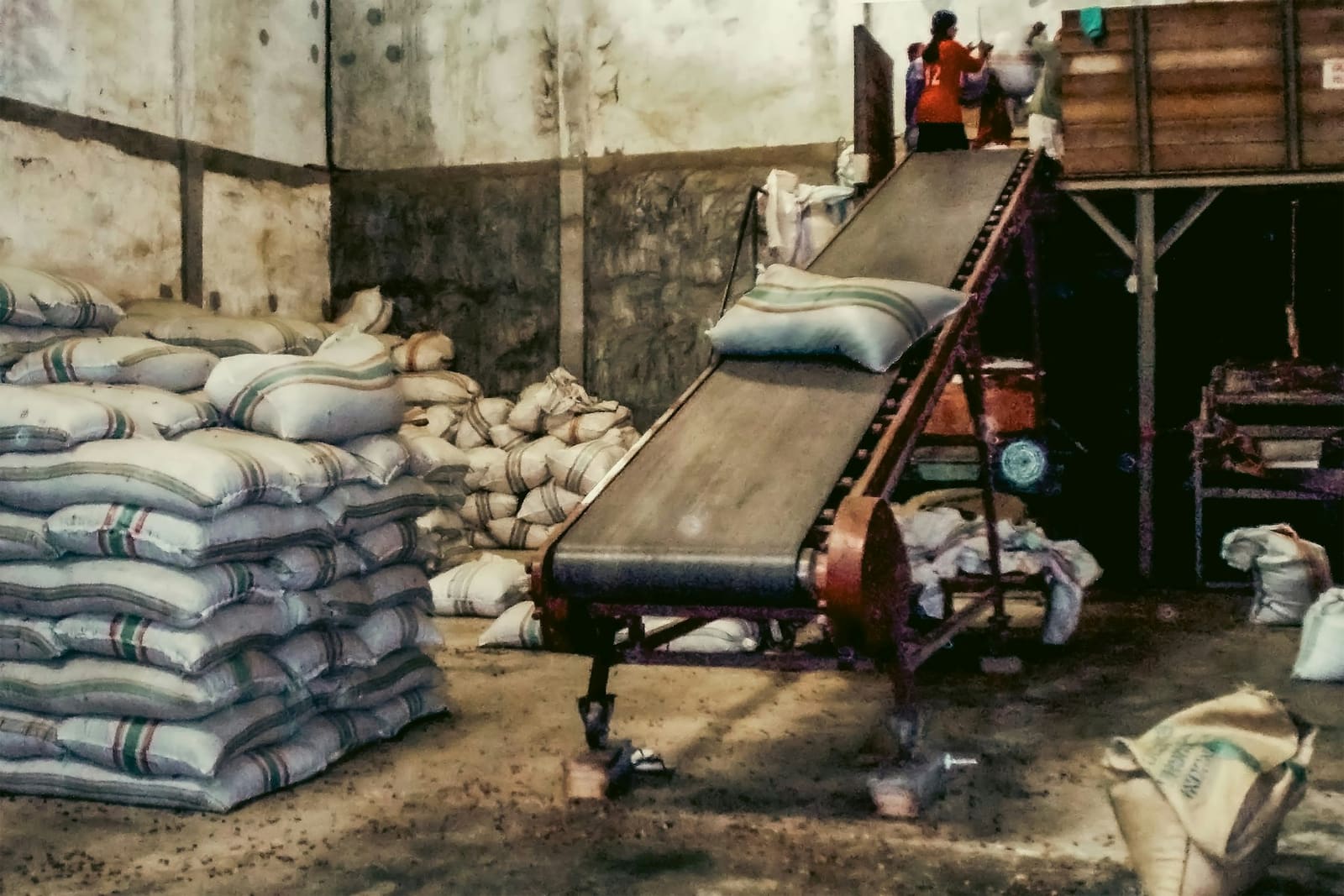
- Final hulling, density table, screen sizing, colour sorter, two hand-sorting lines
- Sorting floor
- 24 people, and every Grade 1 lot crosses it twice
- Storage
- 900 tonnes under cover, on pallets, off the wall
- Distance
- 20 minutes from the container gate at Belawan
Milling decides what a coffee can be. Grading decides what leaves.
The numbers we hold every lot to, how we cup, and what we keep on the shelf in case you disagree.
Sheet 05 — Quality