Sheet 07 of 08
From origin to export,
with fewer layers
in between.
Kavia connects Indonesian coffee producers and supply partners with roasters and importers around the world.
We select green coffee by origin, process, quality and availability, then coordinate its preparation for international shipment. Our export capability allows us to work directly with buyers who want a clear path from Indonesian origin to their destination market.
For every coffee we offer, we aim to make the details clear: its origin, process, harvest information, preparation and commercial specifications. We are building Kavia for the long term — with reliable sourcing, careful quality evaluation and straightforward communication at the centre of every shipment. Indonesian green coffee. Prepared for global buyers.
Built around Indonesian coffee
Kavia is built to make Indonesian green coffee easier to source, evaluate and export for buyers around the world.
01
Source at origin
We work with coffee from established growing regions across Indonesia, selecting lots based on origin, variety, processing and quality.
02
Evaluate the lot
Before a coffee is offered commercially, we review its specifications and sample quality so buyers can make decisions with clear information.
03
Prepare for export
Selected coffees are prepared according to the agreed specifications, with attention to quality, documentation and shipment requirements.
04
Ship from Indonesia
Our export capability allows Kavia to coordinate international shipments from Indonesia, including FOB Belawan where applicable.
05
Build the next crop
A shipment is not the end of the relationship. We aim to build reliable sourcing relationships that make the next crop as straightforward as the first.
One origin. One lot. One clear conversation.
What we can show you
- Certified
- 14 of 41 groups certified organic or in conversion; two Fair Trade; three Rainforest Alliance
- Shade
- Most plots we buy from are already agroforestry — coffee under dadap, pine, or citrus, because that is how it has always been planted here
- Mapped
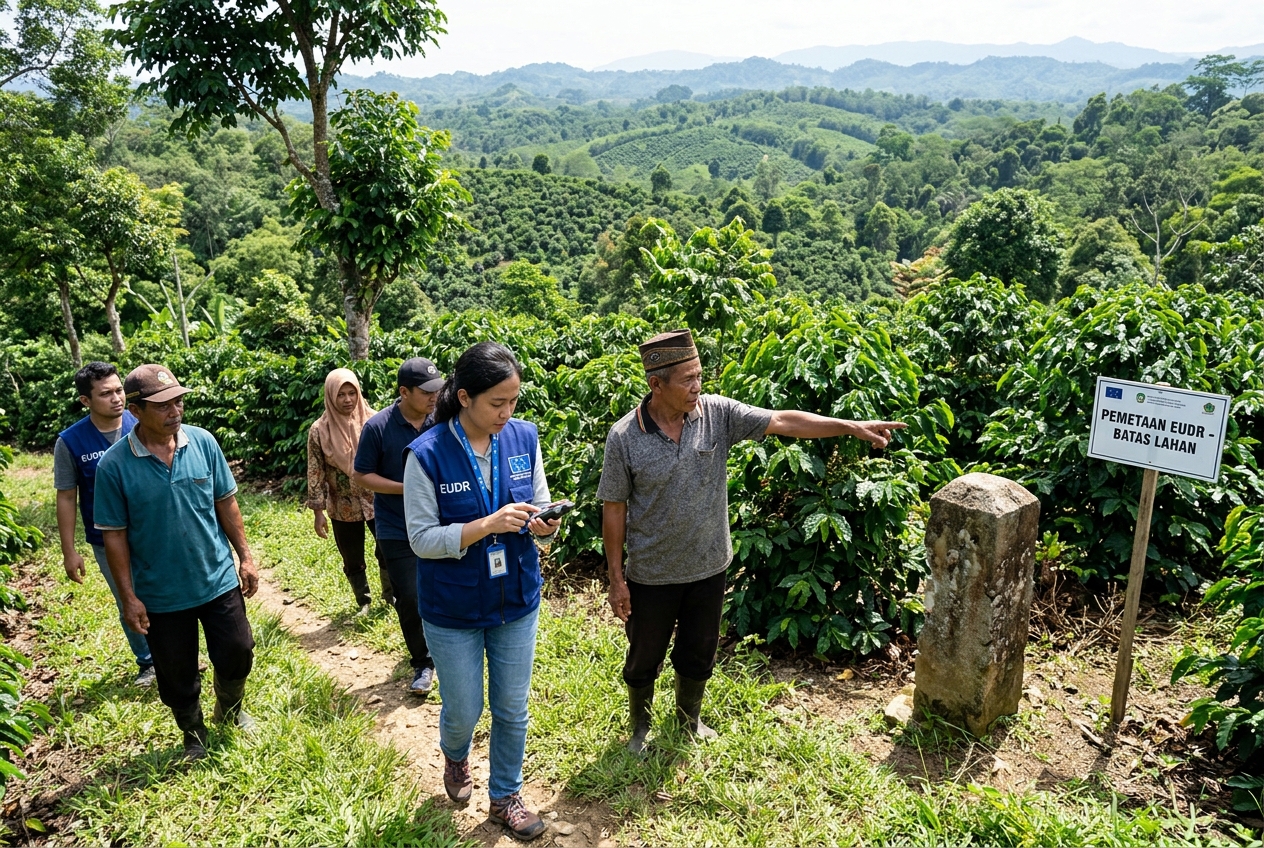
- Plot polygons collected for all 41 groups. No plot in our mapped set was cleared of forest after 31 December 2020.
- On request
- The GeoJSON file, the certificates, and the name of the certifier for any lot you buy
What we do not claim
We are not carbon neutral and have not measured our footprint properly enough to say otherwise. We do not pay a living income differential, and we will not put a word like that on a page until it is audited by somebody who is not us.
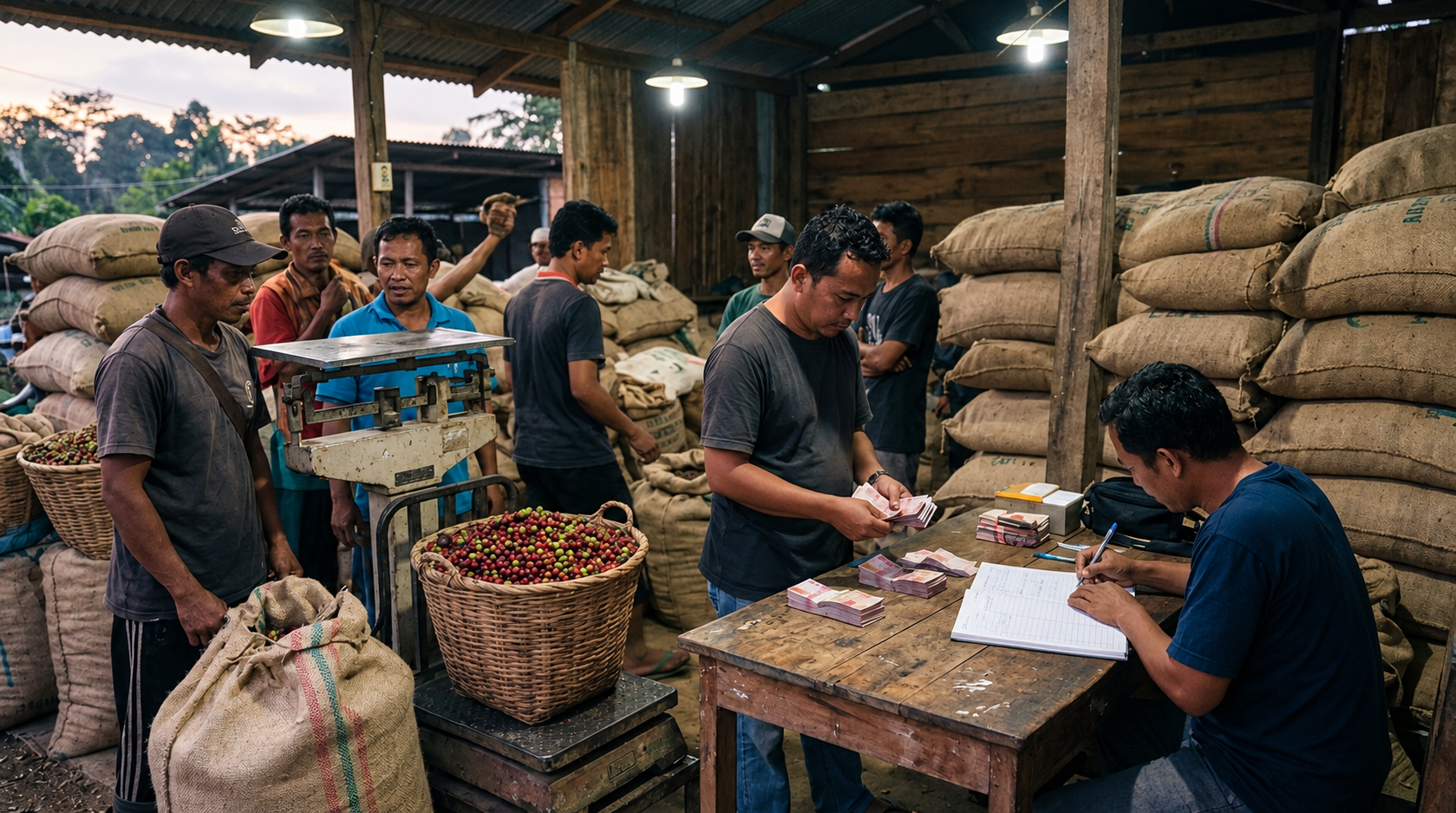
What we will say is the price we paid at the weighing station and what we sold the coffee for. If that comparison is the one you care about, ask for it by mark and we will send it.
Why we will sometimes tell you no
An exporter who also brokers can fill any order. If a roaster asks for forty tonnes of something they did not mill, they buy it on the Medan market as asalan — unsorted, unknown yard, unknown week — clean it up, and ship it under their mark. It is a legitimate business and it is not ours.
We sell what came through our mill. When Flores is short, Flores is short, and we would rather say so in February than send you something adjacent in June. It costs us volume every crop and it is the only reason the traceability on the rest of this site means anything.
Come and see it, or start with a sample.
Visitors are welcome at the Medan lab any week of the year, and at the mill in Bener Meriah during the main crop between October and February. Either way, the coffee is easier to argue about on a cupping table.
Sheet 08 — Contact